

Behind on Property Taxes in Texas? Sell Before a Lien Becomes a Crisis
Introduction: The Penalty That Grows While You Sleep
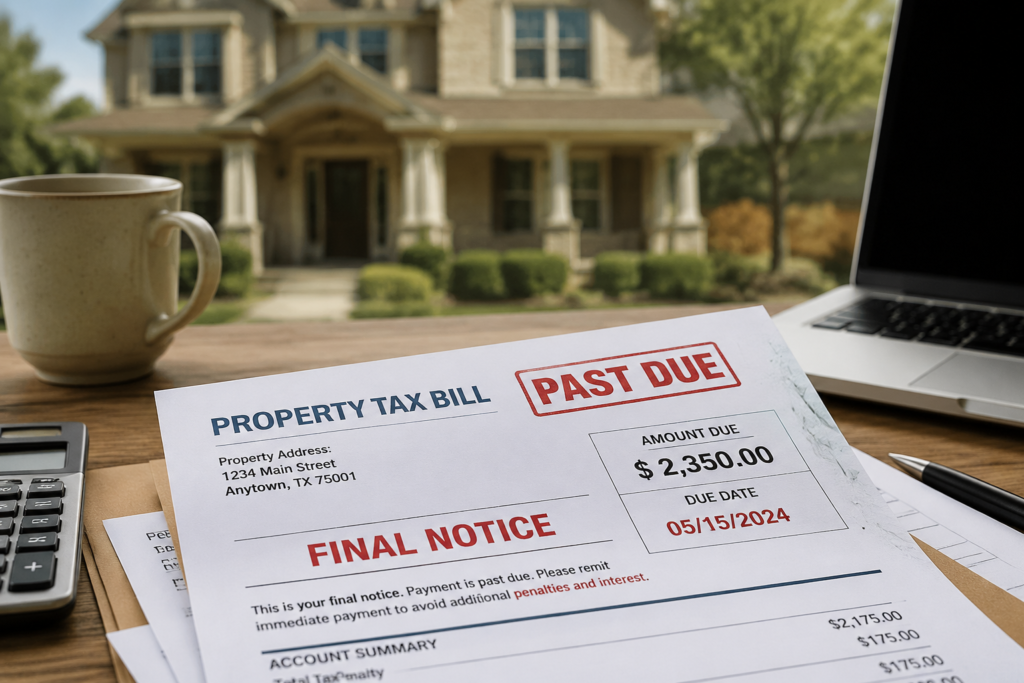
Property taxes in Texas are not optional — and they don’t wait. Unlike income taxes, where you might catch up on a payment plan quietly, delinquent property taxes in Texas trigger a legal process that begins almost immediately and can ultimately lead to losing your home entirely.
For homeowners in Travis, Williamson, Hays, and surrounding counties, property tax bills have skyrocketed in recent years alongside soaring appraisals. Thousands of homeowners — particularly those on fixed incomes, those who’ve experienced job loss, or those dealing with other financial stressors — have found themselves falling behind.
If you’re in this situation, you need to understand exactly how the Texas property tax lien process works, what happens if you don’t act, and what your realistic options are — including selling your home before the lien spirals into something unmanageable.
How Texas Property Tax Liens Work
In Texas, a property tax lien automatically attaches to your property on January 1 of each tax year — before you even receive a bill. This is a ‘superior lien,’ meaning it takes priority over most other liens, including your mortgage. Every year you owe taxes, a new lien is created.
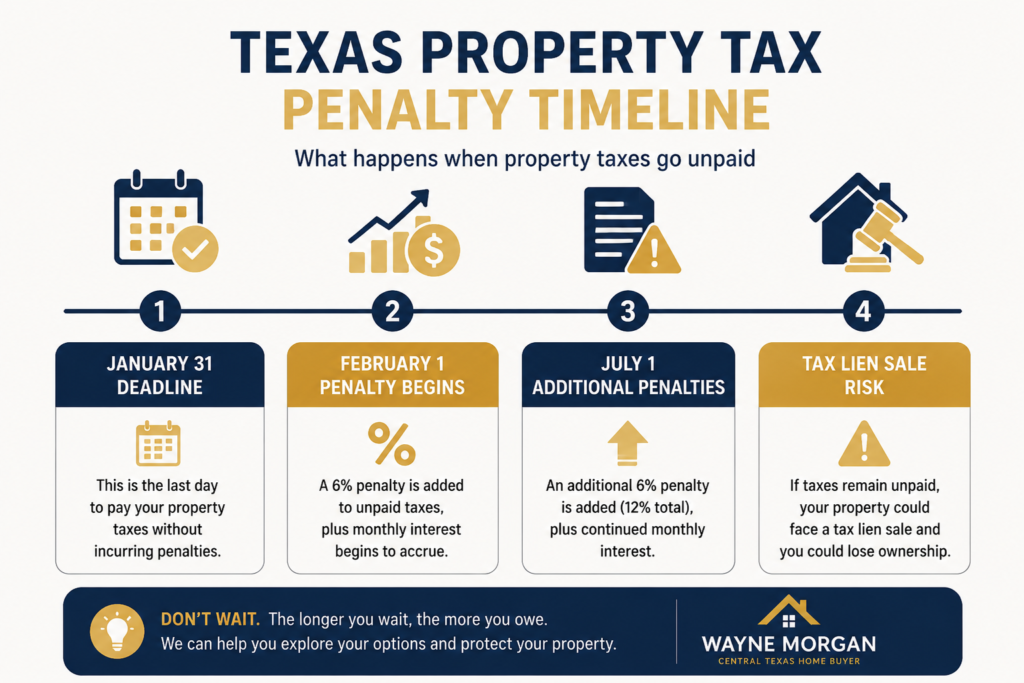
The payment deadline is January 31 of the following year (so 2024 taxes are due January 31, 2025). After that date, the penalties begin accumulating.
How Texas Property Tax Penalties Escalate
This is where many homeowners underestimate the danger. Penalties in Texas compound in a way that turns a manageable shortfall into a crushing debt:
- February 1: A 7% penalty is immediately added to the unpaid balance.
- July 1: An additional 20% collection fee is added when the account is turned over to a delinquent tax attorney (this is essentially a law firm collection fee on top of penalties).
- Each subsequent month: 1% interest per month continues to compound.
This means a $6,000 tax bill unpaid after six months can grow to $9,000 or more — and continues to grow every month. For homeowners who miss multiple years, the liability can become genuinely insurmountable.
Can the Government Take Your Home for Unpaid Property Taxes?
Yes — and in Texas, this process can happen more quickly than most homeowners realize. Texas counties can file suit to collect delinquent taxes and ultimately foreclose on the property through a court judgment. The timeline from first delinquency to foreclosure varies by county and circumstances, but tax lien foreclosures in Texas can proceed in as little as two years from the first missed payment.
Unlike mortgage foreclosure, tax lien foreclosure does not require your lender’s involvement. The county can foreclose regardless of whether your mortgage is current. This surprises many homeowners who believe that staying current on their mortgage means their home is safe.
Your Rights as a Texas Property Owner
Texas law does give homeowners certain protections and opportunities worth knowing about:
- Homestead Exemption: Applying for a homestead exemption reduces your taxable appraised value by at least $100,000 (for school taxes) and caps annual value increases at 10%. If you haven’t claimed this, do so immediately through your county appraisal district.
- Protest Your Appraisal: You have the right to protest your property appraisal annually if you believe the value is too high. Many Texas homeowners overpay because they don’t know this right exists.
- Payment Installment Plans: Texas Tax Code allows qualifying homeowners to enter into installment payment plans for delinquent taxes. Contact your county tax assessor-collector directly to inquire.
- Deferral for Seniors and Disabled: Homeowners 65 or older (or with a qualifying disability) may be eligible to defer property tax payments entirely on a homestead — with interest capped at 5% annually — until the property is sold.
The Problem with Tax Loans
You may have seen advertisements for ‘property tax loans’ — companies that pay your delinquent taxes and then charge you interest on the loan, often at rates of 13–18% annually. While these can stop the immediate penalty clock, they replace a government lien with a private lien — often at a higher interest rate and with aggressive foreclosure provisions if you miss a payment.
Tax loans can make sense in specific situations, but for homeowners who are already financially stretched, they often represent a temporary fix that leads to a larger problem. Before signing any tax loan agreement, have an attorney or financial advisor review the terms.
When Selling Is the Smartest Move
For many Texas homeowners in the tax lien situation, selling the home — particularly for cash to a buyer like Wayne Sells Houses — is the most financially rational decision. Here’s why:
- Your equity is at stake: Every month you delay, the penalties eat into your equity. If you have equity in the home, selling now lets you capture that value before it’s consumed by penalties, fees, and interest.
- Stop the bleeding immediately: A cash sale closes in 7–21 days. Your delinquent taxes are paid at closing from the proceeds. The liens are discharged. The problem is solved permanently.
- No repairs required: Homes behind on taxes often have deferred maintenance as well. Cash buyers like Wayne purchase as-is — no renovation needed.
- No agent fees: There are no commissions with a cash sale, meaning more of the net proceeds go toward clearing your debts.
What Happens at Closing When There Are Tax Liens?
When you sell a home with outstanding property tax liens, those liens are paid at closing from the sale proceeds before you receive anything. The title company handles this automatically as part of the standard closing process.
Here’s the sequence:
- The title company conducts a title search and identifies all outstanding liens (tax liens, mortgage, HOA, mechanics liens, etc.).
- Payoff amounts for each lien are obtained from the respective authorities.
- At closing, the purchase proceeds first pay off all liens.
- Any remaining proceeds are disbursed to you.
This means that even if your tax bill has grown significantly, as long as there is sufficient equity in the home to cover all liens and the sale price, you walk away clean — with cash in hand and no remaining tax liability on the property.
What If the Liens Exceed the Home's Value?
In some cases — particularly when a homeowner has missed multiple years and accumulated multiple liens — the total debt may approach or exceed the home’s market value. This is a more complex situation, but it’s not hopeless. Options include:
- Negotiating a lien reduction directly with the county (sometimes possible in hardship cases)
- A short sale arrangement where all lienholders agree to accept less than full payoff
- Consulting a Texas real estate attorney about available remedies
Wayne Sells Houses has experience navigating complex lien situations and can connect you with the right professionals when needed.
Don't Wait: The Cost of Doing Nothing
The single worst outcome for any Texas homeowner with delinquent property taxes is inaction. Every month of delay costs real money in penalties and interest. Every year of delay brings the foreclosure timeline closer. And once a tax foreclosure judgment is entered, your options narrow dramatically.
If you’re behind on property taxes — even just one year — the time to explore your options is now, while you still have choices. Wayne Sells Houses offers a free, confidential conversation with no obligation. You’ll learn exactly what your home is worth and what a cash sale could put in your pocket after all liens are cleared.
Call (512) 997-8457 or visit waynesellshouses.com. There’s no pressure, no judgment, and no cost to find out where you stand