

What Happens After Missing a Mortgage Payment?
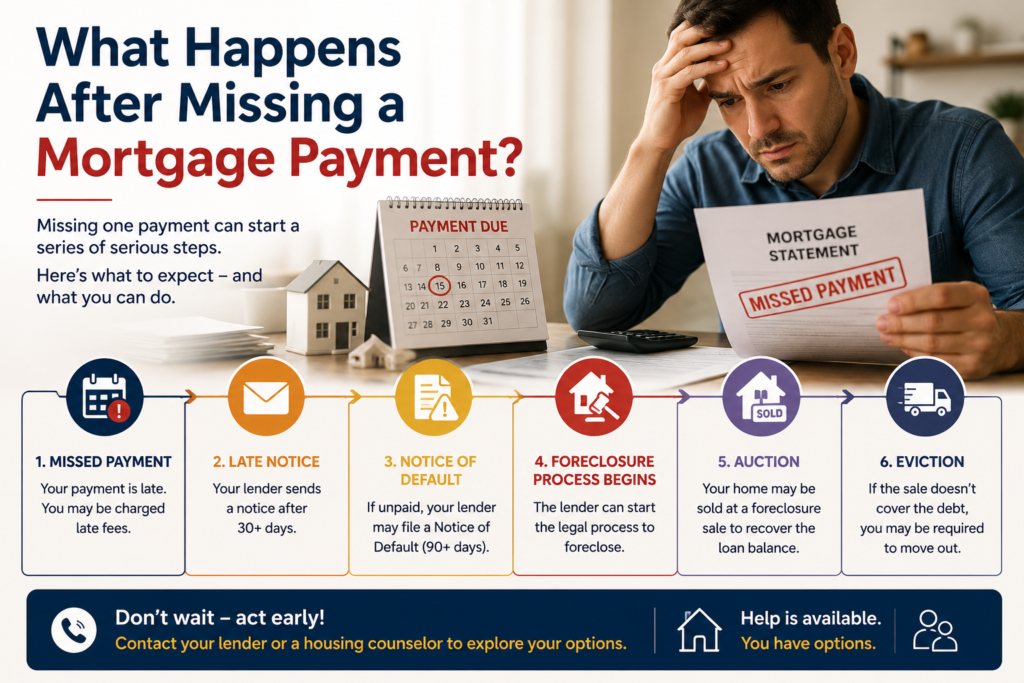
A Complete Guide for Homeowners
Owning a home is a significant milestone, but keeping up with mortgage payments can sometimes become challenging. Whether it’s due to an unexpected medical expense, job loss, reduced income, or simply forgetting the due date, missing a mortgage payment can be stressful.
The good news is that one missed payment doesn’t automatically mean you’ll lose your home. Mortgage lenders generally follow a process before taking serious legal action, giving homeowners time to resolve the issue.
In this guide, we’ll explain exactly what happens after missing a mortgage payment, what penalties you may face, and the best steps you can take to protect your finances and your home.
Why People Miss Mortgage Payments
Life is unpredictable, and many homeowners experience temporary financial setbacks. Some common reasons include:
- Job loss or reduced income
- Medical emergencies
- Unexpected home repairs
- Divorce or separation
- Business losses
- Rising living expenses
- Forgetting the payment due date
- Banking or payment processing issues
Missing one payment doesn’t make you a bad homeowner—but ignoring the problem can make it much worse.
What Happens After Missing a Mortgage Payment?
Day 1–15: Payment Is Late
Most mortgage lenders offer a grace period, usually between 10 to 15 days after the due date.
During this period:
- Your payment is considered late.
- You usually won’t face immediate legal action.
- Some lenders may not charge a late fee until the grace period ends.
- You can still make the payment and bring your account current.
Tip: Check your mortgage agreement to understand your lender’s grace period.
After the Grace Period: Late Fees Apply
If your payment remains unpaid after the grace period:
You may face:
- Late payment fees
- Additional interest
- Penalty charges
- Collection notices
The exact amount depends on your lender and loan agreement.
Example:
If your monthly mortgage payment is $2,000, and your lender charges a 5% late fee, you could owe:
Late Fee = $100
This amount gets added to your outstanding balance.
30 Days Late: Credit Score Impact
Once your payment becomes 30 days overdue, your lender may report the missed payment to the credit bureaus.
This can result in:
- Lower credit score
- Reduced chances of loan approval
- Higher interest rates on future loans
- Difficulty obtaining credit cards
For borrowers with excellent credit, even one missed payment can significantly affect their credit score.
60 Days Late: Increased Collection Efforts
If the payment remains unpaid for two months:
Your lender may begin:
- Frequent reminder calls
- Emails
- Official warning letters
- Requests to discuss repayment options
At this stage, your lender generally wants to work with you rather than begin foreclosure.
90 Days Late: Serious Delinquency
After approximately 90 days, your mortgage is considered seriously delinquent.
Possible consequences include:
- Default notices
- Strong collection efforts
- Legal notices
- Increased penalties
- Referral to foreclosure department
This is the point where immediate action becomes extremely important.
Can You Lose Your Home?
Yes—but not immediately.
Foreclosure is usually considered the last option after multiple missed payments.
Most lenders prefer helping borrowers stay in their homes because foreclosure is expensive and time-consuming.
Before foreclosure, lenders often explore solutions like:
- Loan modification
- Repayment plans
- Temporary payment reduction
- Mortgage forbearance
- Refinancing (if eligible)
Understanding the Foreclosure Process
Although timelines vary by country and lender, the process generally follows these stages:
Stage 1: Missed Payments
Payments become overdue.
↓
Stage 2: Delinquency Notices
The lender sends reminders and warnings.
↓
Stage 3: Notice of Default
Formal legal notice that your loan is in default.
↓
Stage 4: Foreclosure Proceedings
Legal action begins if no resolution is reached.
↓
Stage 5: Property Sale
The property may eventually be sold to recover the remaining loan balance.
How Missing Mortgage Payments Affect Your Financial Future
Missing mortgage payments can have long-term consequences beyond your home loan.
Potential impacts include:
- Lower credit score
- Difficulty getting personal loans
- Higher insurance premiums (in some regions)
- Higher interest rates
- Reduced refinancing options
- Challenges when purchasing another home
The sooner you address the issue, the easier it is to minimize these effects.
Tips to Avoid Missing Future Mortgage Payments
Preventing missed payments is much easier than recovering from them.
Here are some practical tips:
- Set payment reminders on your phone
- Enable automatic mortgage payments
- Maintain an emergency savings fund
- Track monthly expenses regularly
- Create a monthly household budget
- Stay in communication with your lender if financial issues arise
- Keep extra funds in your account before the due date
Small financial habits can make a big difference over time.