Can Bankruptcy Stop Foreclosure?
Everything Homeowners Need to Know
Losing a home is one of the most stressful experiences a homeowner can face. If you’re behind on mortgage payments, you may be wondering:
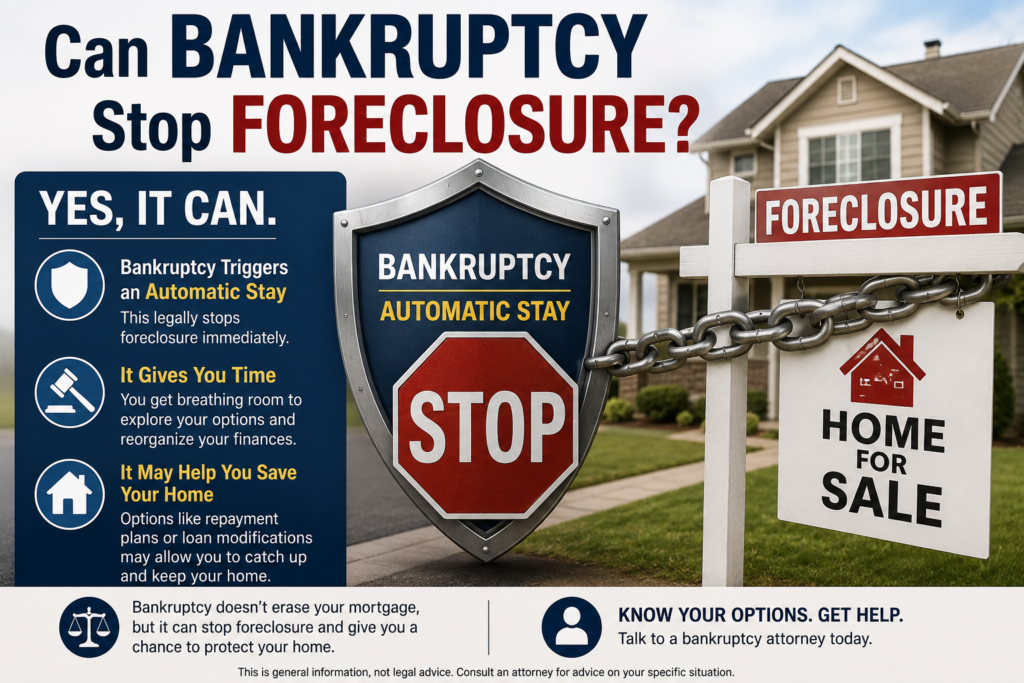
Can bankruptcy stop foreclosure?
The answer is yes—but only under certain circumstances.
Filing for bankruptcy can temporarily stop a foreclosure through a legal protection known as the automatic stay. Depending on the type of bankruptcy you file and your financial situation, it may even help you catch up on missed mortgage payments and keep your home.
In this guide, we’ll explain how bankruptcy affects foreclosure, the different bankruptcy options available, and whether it’s the right solution for your situation.
What Is Foreclosure?
Foreclosure is the legal process lenders use to recover the remaining balance of a mortgage when a borrower stops making payments.
Typically, the foreclosure process follows these stages:
- Missed mortgage payments
- Late notices from the lender
- Notice of default
- Foreclosure proceedings begin
- Property auction or sale
- Home ownership transfers to the lender or a new buyer
Once foreclosure begins, homeowners often feel like they have no options. Fortunately, bankruptcy may provide valuable time and legal protection.
How Does Bankruptcy Stop Foreclosure?
When you file for bankruptcy, the court immediately issues something called an Automatic Stay.
An automatic stay is a federal court order that temporarily prevents creditors from taking collection actions against you.
This means creditors generally must stop:
- Foreclosure proceedings
- Collection calls
- Wage garnishments
- Lawsuits
- Bank levies
- Repossession efforts
For homeowners, this temporary pause can provide much-needed breathing room to explore repayment options or negotiate with the mortgage lender.
Understanding the Automatic Stay
Think of the automatic stay as hitting the pause button on your financial obligations.
Imagine your foreclosure sale is scheduled for next week. If you file bankruptcy before the sale occurs, the foreclosure process usually stops immediately.
However, it’s important to understand that:
- The mortgage debt does not disappear.
- The lender can request court permission to continue foreclosure.
- The protection is temporary unless additional actions are taken.
The automatic stay gives you time—but it is not a permanent solution on its own.
Chapter 7 vs. Chapter 13 Bankruptcy
Not all bankruptcies work the same way.
Let’s compare the two most common options.
| Feature | Chapter 7 | Chapter 13 |
|---|---|---|
| Stops foreclosure temporarily | Yes | Yes |
| Eliminates unsecured debt | Yes | Partial |
| Creates repayment plan | No | Yes |
| Helps catch up missed mortgage payments | Usually No | Yes |
| Better chance of keeping your home | Limited | Excellent |
Chapter 7 Bankruptcy
Chapter 7 bankruptcy is often called liquidation bankruptcy.
It helps eliminate many unsecured debts, including:
- Credit card balances
- Personal loans
- Medical bills
- Payday loans
While Chapter 7 immediately stops foreclosure through the automatic stay, the lender may eventually continue foreclosure if mortgage payments remain unpaid.
Chapter 7 may be suitable if:
- Your income is limited.
- You cannot realistically afford your mortgage.
- You need debt relief quickly.
- You plan to surrender the property.
Chapter 13 Bankruptcy
Chapter 13 is commonly known as reorganization bankruptcy.
Instead of eliminating debt immediately, it creates a court-approved repayment plan lasting between 3 and 5 years.
This option allows homeowners to:
- Catch up on overdue mortgage payments
- Continue making regular monthly mortgage payments
- Keep their home while paying arrears gradually
For many homeowners facing foreclosure, Chapter 13 provides the best opportunity to save their property.