

What Is a Short Sale?
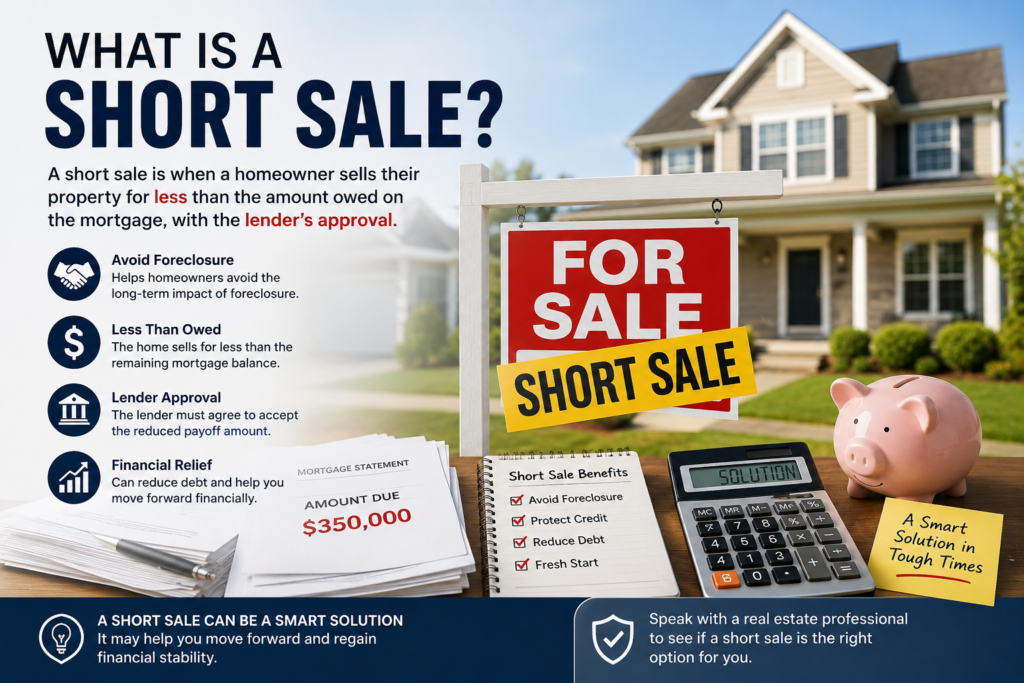
A Complete Guide for Homebuyers and Homeowners
Buying or selling a home isn’t always straightforward. Sometimes, homeowners face financial hardships that make it impossible to keep up with mortgage payments. In such situations, a short sale can become a practical solution.
But what exactly is a short sale? Is it beneficial for buyers? Does it affect your credit? And how is it different from foreclosure?
In this comprehensive guide, we’ll answer all these questions and help you understand everything you need to know about short sales.
What Is a Short Sale?
A short sale is a real estate transaction in which a homeowner sells their property for less than the amount they still owe on their mortgage.
The lender agrees to accept the lower sale price instead of requiring the full loan balance. Since the lender receives less money than what is owed, they must approve the transaction before the sale can proceed.
Example:
Let’s say:
- Remaining mortgage balance: $350,000
- Current market value of home: $300,000
- Buyer offers: $295,000
If the lender agrees to accept $295,000 instead of the full $350,000, the property is sold through a short sale.
Why Do Homeowners Choose a Short Sale?
A homeowner may consider a short sale when they are experiencing financial difficulties and can no longer afford their mortgage.
Common reasons include:
- Loss of employment
- Medical emergencies
- Divorce or separation
- Unexpected financial hardship
- Declining property values
- Relocation due to work
- Rising mortgage payments
- Death of a family member
Instead of allowing the property to go into foreclosure, a short sale offers another path.
How Does a Short Sale Work?
The short sale process involves multiple parties and usually takes longer than a traditional home sale.
Step 1: Financial Hardship
The homeowner experiences financial difficulties and realizes they cannot continue mortgage payments.
Step 2: Contact the Lender
The homeowner requests permission from the lender to sell the property through a short sale.
Step 3: Property Listing
The home is listed for sale, usually with the help of an experienced real estate agent.
Step 4: Buyer Makes an Offer
Interested buyers submit offers just like in a traditional home purchase.
Step 5: Lender Reviews the Offer
The lender examines:
- Property value
- Buyer’s offer
- Homeowner’s financial condition
- Market conditions
Step 6: Approval
If approved, the lender allows the sale to proceed.
Step 7: Closing
The buyer purchases the property, and the lender receives the agreed sale amount.
Benefits of a Short Sale
For Homeowners
A short sale offers several advantages compared to foreclosure.
Helps Avoid Foreclosure
Foreclosure can have long-lasting financial consequences. A short sale may help homeowners avoid this outcome.
Less Credit Damage
Although a short sale can affect credit, it is often less damaging than foreclosure.
Reduced Financial Stress
Selling the home can help eliminate mortgage obligations and reduce financial pressure.
Opportunity for a Fresh Start
Homeowners can begin rebuilding their finances sooner.
For Buyers
Buying a short sale property can also be rewarding.
Benefits include:
- Lower purchase price
- Potential investment opportunity
- Less competition compared to traditional listings
- Possibility of long-term appreciation
- Access to desirable neighborhoods at reduced prices
Disadvantages of a Short Sale
Like any real estate transaction, short sales have drawbacks.
For Sellers
- Lender approval is required
- Lengthy approval process
- Possible tax implications
- Credit score may decrease
- Not all lenders approve short sales
For Buyers
- Long waiting period
- Property sold “as-is”
- Repairs are often needed
- Uncertain approval
- Limited negotiation options
Short Sale vs Foreclosure
Understanding the difference between a short sale and foreclosure is important.
| Short Sale | Foreclosure |
|---|---|
| Homeowner initiates the sale | Lender takes ownership |
| Requires lender approval | Initiated by lender |
| Usually less credit damage | Severe credit impact |
| Homeowner has more control | Homeowner loses control |
| Can be less stressful | Often involves legal proceedings |