

What Is a Notice of Default?
What Is a Notice of Default?
Imagine opening your mailbox and finding an official document that warns you your home could be at risk if you don’t take immediate action. That document is called a Notice of Default (NOD).
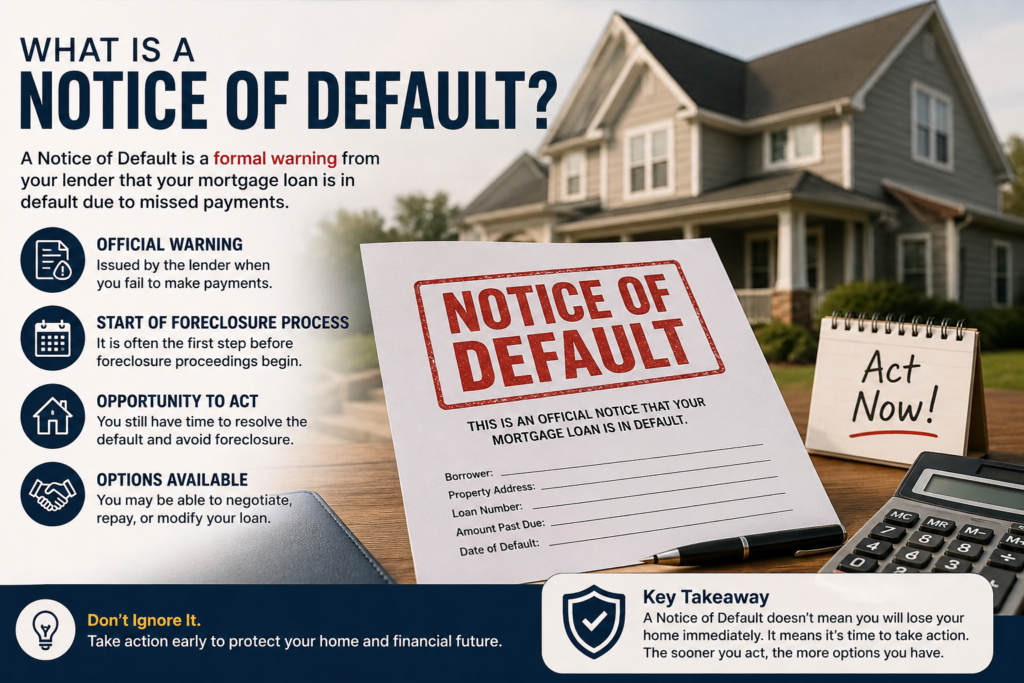
A Notice of Default is a legal notice issued by a lender when a borrower has failed to make mortgage payments for a specified period. It marks the beginning of the foreclosure process in many regions and serves as a formal warning that the loan is in default.
Receiving a Notice of Default doesn’t necessarily mean you’ll lose your home immediately. Instead, it’s an opportunity to take corrective action before foreclosure proceedings move forward.
Why Is a Notice of Default Issued?
Lenders issue a Notice of Default after a borrower has consistently missed mortgage payments and failed to resolve the overdue balance.
Common reasons include:
- Missing several consecutive mortgage payments
- Financial hardship due to job loss
- Medical emergencies
- Divorce or family issues
- Unexpected expenses
- Reduced household income
- Failure to comply with mortgage agreement terms
In most cases, lenders attempt to contact borrowers multiple times before issuing the notice.
How Does the Notice of Default Process Work?
Understanding the timeline can help reduce panic and allow homeowners to make informed decisions.
Step 1: Missed Mortgage Payments
The borrower misses one or more monthly mortgage payments.
Step 2: Late Notices and Collection Attempts
The lender sends reminders, late payment notices, emails, or phone calls requesting payment.
Step 3: Loan Becomes Delinquent
After several missed payments (typically around 90 days, though timelines vary), the loan is officially considered in default.
Step 4: Notice of Default Is Filed
The lender records and serves the Notice of Default, informing the borrower that foreclosure proceedings may begin if the default isn’t resolved.
Step 5: Opportunity to Cure the Default
Most borrowers are given a period to:
- Pay the overdue amount
- Negotiate with the lender
- Apply for loan modification
- Arrange a repayment plan
- Sell the property before foreclosure
Step 6: Foreclosure Proceedings
If no solution is reached within the allowed timeframe, the lender may proceed with foreclosure.
What Information Is Included in a Notice of Default?
Although formats vary depending on local laws, a Notice of Default generally contains:
- Borrower’s name
- Property address
- Mortgage account details
- Total overdue amount
- Missed payment information
- Deadline for resolving the default
- Lender’s contact information
- Explanation of foreclosure rights
- Legal notices required by state or country laws
What Should You Do After Receiving a Notice of Default?
Receiving a Notice of Default can be stressful, but acting quickly can make a significant difference.
1. Stay Calm
Avoid ignoring the notice. The earlier you respond, the more options you’ll likely have.
2. Review the Document Carefully
Check:
- Outstanding balance
- Payment history
- Dates
- Fees
- Any possible errors
If you notice inaccuracies, contact your lender immediately.
3. Contact Your Lender
Many lenders are willing to work with borrowers experiencing temporary financial hardship.
Possible solutions include:
- Loan modification
- Payment deferment
- Temporary forbearance
- Repayment plan
- Mortgage refinancing (if eligible)
4. Seek Professional Advice
Consider consulting:
- Housing counselors
- Financial advisors
- Mortgage specialists
- Real estate attorneys
Professional guidance can help you understand your legal rights and available options.
5. Explore Financial Assistance Programs
Depending on your location, government agencies and nonprofit organizations may offer programs designed to help struggling homeowners avoid foreclosure.
Can You Stop Foreclosure After Receiving a Notice of Default?
Yes—in many situations, foreclosure can still be avoided.
Some common options include:
- Catching up on missed payments
- Negotiating directly with the lender
- Loan reinstatement
- Loan modification
- Selling the home voluntarily
- Refinancing the mortgage
- Filing for bankruptcy (only after obtaining legal advice)
The sooner action is taken, the more solutions are generally available.
Notice of Default vs. Notice of Foreclosure
Many people confuse these two terms, but they are not the same.
| Notice of Default | Notice of Foreclosure |
|---|---|
| First formal warning | Later stage in foreclosure |
| Gives borrower time to fix the issue | Indicates foreclosure is moving forward |
| Opportunity to negotiate | Fewer options remain |
| Loan is officially in default | Property may soon be sold |