

How Long Before the Bank Takes My House?
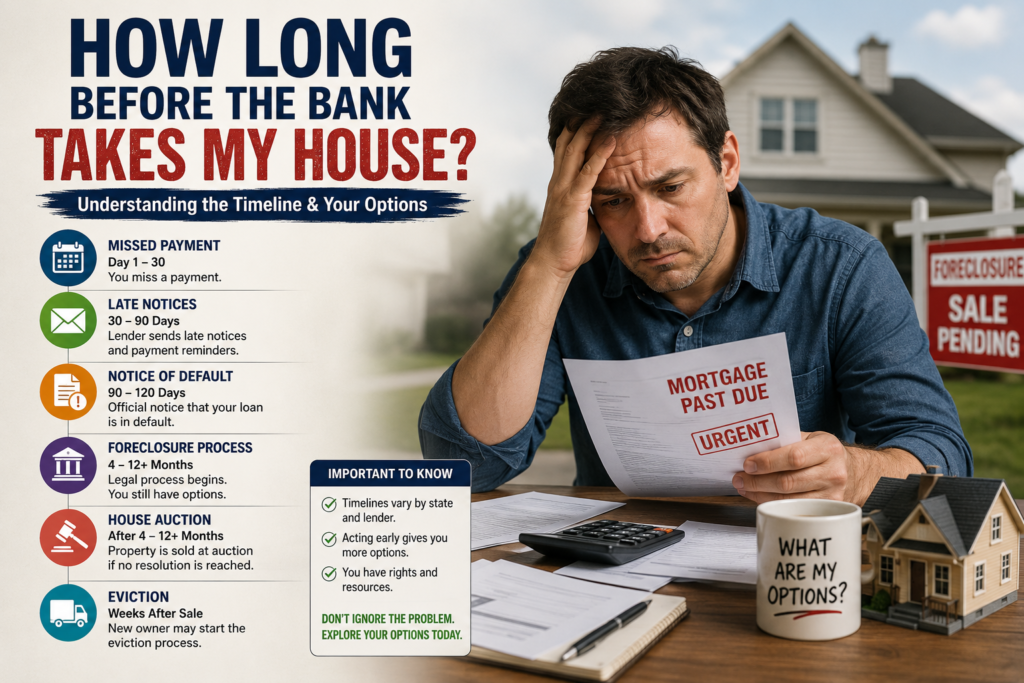
How Long Before the Bank Takes My House?
Owning a home is one of life’s biggest achievements, but unexpected financial difficulties can make keeping up with mortgage payments challenging. Whether you’ve lost your job, experienced medical expenses, or faced other financial hardships, you may be wondering:
“How long before the bank takes my house?”
The good news is that banks don’t take your home immediately after you miss a payment. Foreclosure is a legal process that often takes several months or even longer, depending on your lender, local laws, and whether you take action early.
In this guide, we’ll explain the foreclosure timeline, what happens at each stage, and the steps you can take to protect your home.
Understanding the Foreclosure Process
Foreclosure is the legal process a lender uses to recover the money owed on a mortgage after a homeowner stops making payments.
The process is designed to give homeowners multiple opportunities to:
- Catch up on missed payments
- Work out a repayment plan
- Refinance the mortgage
- Sell the property voluntarily
- Seek financial assistance
This means that missing one mortgage payment doesn’t automatically mean losing your home.
Typical Timeline Before the Bank Takes Your House
Although timelines vary by country and state, here’s a general overview.
1. First Missed Payment (1–30 Days Late)
Once you miss your mortgage payment:
- The lender may charge a late payment fee.
- You’ll receive reminder emails, letters, or phone calls.
- Your loan is usually not yet in foreclosure.
What You Should Do
Contact your lender immediately.
Explain your financial situation.
Ask about hardship assistance programs.
The earlier you communicate, the more options you’ll have.
2. 30–90 Days Behind on Payments
After missing two or three payments:
The lender becomes increasingly concerned.
You may receive:
- Default notices
- Collection calls
- Payment demand letters
- Offers for repayment assistance
Many lenders still prefer working with homeowners rather than starting foreclosure because foreclosure is expensive for both parties.
At This Stage You May Qualify For
- Loan modification
- Payment deferment
- Mortgage forbearance
- Temporary repayment plans
3. Notice of Default (Around 90–120 Days)
If payments continue to be missed, the lender may issue a Notice of Default (NOD) or begin formal foreclosure proceedings.
This is often considered the official beginning of foreclosure.
You still have time to:
- Pay overdue amounts
- Negotiate with the lender
- Sell your property
- Seek legal advice
Ignoring this notice can significantly reduce your available options.
4. Foreclosure Proceedings Begin
Once foreclosure officially starts:
The bank files legal paperwork.
Depending on where you live, the process may involve:
- Court hearings
- Legal notices
- Public advertisements
- Auction scheduling
This stage may last anywhere from several weeks to many months.
5. Foreclosure Sale or Auction
If no agreement is reached:
The property is scheduled for public sale.
At auction:
- Investors may purchase the home.
- The lender may become the owner if no acceptable bids are received.
Even at this point, some locations allow homeowners to redeem the property by paying the outstanding balance before ownership officially changes.
6. Eviction Process
If the property is sold:
The new owner may begin the legal eviction process.
Homeowners are generally given notice before they must leave the property.
Banks cannot simply change the locks overnight. Eviction also follows legal procedures.
How Long Does the Entire Process Usually Take?
Here’s a general estimate:
| Stage | Approximate Timeline |
|---|---|
| Missed Payment | Day 1 |
| Late Fees | 15–30 Days |
| Multiple Missed Payments | 30–90 Days |
| Notice of Default | 90–120 Days |
| Foreclosure Process | 4–12 Months |
| Eviction | Several Weeks After Sale |
Total Time: Anywhere from 4 months to over a year, depending on local laws and circumstances.
Factors That Affect the Timeline
Several factors can speed up or delay foreclosure.
1. Local Laws
Some states or countries require court approval before foreclosure.
Others allow non-judicial foreclosure, which is usually faster.
2. Lender Policies
Some banks:
- Offer extended hardship programs.
- Delay foreclosure during negotiations.
- Allow repayment arrangements.
Others may move more quickly if there has been no communication.
3. Loan Type
Government-backed loans often have different foreclosure rules compared to conventional loans.
Examples include:
- FHA loans
- VA loans
- USDA loans
These programs may provide additional protections.
4. Communication
Homeowners who stay in contact with their lender generally have more options than those who ignore notices.
Warning Signs You Should Never Ignore
Watch for these signs that foreclosure may be approaching:
- Multiple missed mortgage payments
- Certified letters from your lender
- Notice of Default
- Court summons
- Foreclosure sale notice
- Property inspection notices
Taking action early can make a significant difference.
Ways to Prevent Losing Your Home
If you’re struggling financially, don’t panic. There are several options available.
Talk to Your Lender
Many lenders offer hardship programs designed to help homeowners through temporary financial difficulties.
Request Loan Modification
A loan modification may:
- Lower your monthly payments
- Extend your loan term
- Reduce interest rates
- Make payments more affordable