

Texas Foreclosure Timeline Explained
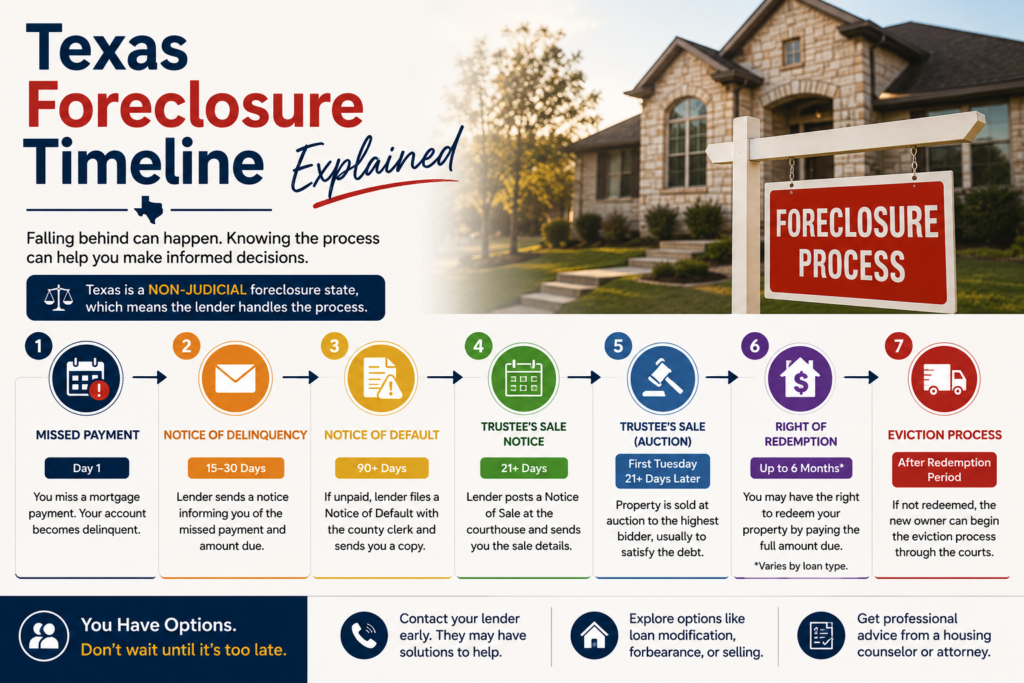
What Every Homeowner Needs to Know
For many homeowners, receiving a foreclosure notice is one of the most stressful experiences imaginable. Financial hardships such as job loss, medical emergencies, rising living costs, or unexpected expenses can make it difficult to keep up with mortgage payments.
If you’re a homeowner in Texas, understanding the Texas foreclosure timeline can help you make informed decisions before it’s too late. The good news is that foreclosure is not an overnight process. Texas law requires lenders to follow specific legal procedures, giving homeowners opportunities to catch up on payments, negotiate with their lender, or explore foreclosure prevention options.
In this comprehensive guide, we’ll explain each stage of the Texas foreclosure timeline, what to expect, and the steps you can take to protect your home.
What Is Foreclosure?
Foreclosure is the legal process a lender uses to recover the remaining balance of a mortgage loan when a homeowner stops making payments.
In Texas, most home loans are secured by a Deed of Trust, allowing lenders to use a non-judicial foreclosure process. This means they generally do not need to go to court before selling the property, making Texas one of the fastest foreclosure states in the U.S.
Texas Foreclosure Timeline: Step-by-Step
Let’s walk through the foreclosure process from the first missed payment to the foreclosure sale.
Stage 1: Miss Your Mortgage Payment (Day 1)
Everything begins when a mortgage payment is missed.
At this point:
- Your account becomes delinquent.
- You may still be within your lender’s grace period.
- No foreclosure begins immediately.
- You may receive payment reminders.
What You Should Do
Make the payment as soon as possible.
Contact your lender if you’re experiencing financial hardship.
Review your mortgage agreement for grace period details.
Stage 2: Grace Period Ends (Around Day 15)
Most lenders provide a grace period of approximately 10–15 days.
After this period:
- Late fees are added.
- Your payment is officially considered late.
- Collection calls or emails may begin.
Although penalties start accumulating, foreclosure has generally not started.
Stage 3: Notice of Default (Usually After 90–120 Days)
If payments remain unpaid for several months, the lender typically sends a Notice of Default.
This notice informs you that:
- Your mortgage is in default.
- The amount required to bring the loan current.
- Deadlines to resolve the default.
- Possible foreclosure if no action is taken.
This is one of the most important stages because homeowners still have opportunities to work with the lender.
Stage 4: Notice of Sale
If the default isn’t resolved, the lender may issue a Notice of Foreclosure Sale.
Texas law generally requires:
- At least 21 days’ notice before the foreclosure sale.
- The notice is filed with the county.
- The notice is posted publicly.
- A copy is mailed to the homeowner.
This gives homeowners one final opportunity to avoid foreclosure.
Stage 5: Foreclosure Sale
Foreclosure sales in Texas usually occur:
- On the first Tuesday of each month
- At the county courthouse or another designated location
- Through a public auction
The highest qualified bidder purchases the property.
Once the sale is completed, ownership transfers to the successful bidder.
How Long Does Foreclosure Take in Texas?
Although every case is unique, a typical Texas foreclosure timeline may look like this:
| Timeline | What Happens |
|---|---|
| Day 1 | Mortgage payment missed |
| Day 15 | Grace period expires |
| 30 Days | Credit score may be affected |
| 60–90 Days | Collection efforts increase |
| 90–120 Days | Notice of Default |
| 21+ Days Before Sale | Notice of Foreclosure Sale |
| First Tuesday of Month | Foreclosure Auction |
Can You Stop Foreclosure in Texas?
Yes. Depending on your circumstances, you may still have several options.
Some common foreclosure prevention strategies include:
Catch Up on Missed Payments
If you can pay the overdue balance, including fees, your lender may allow you to reinstate the loan.
Loan Modification
A loan modification may:
- Reduce monthly payments
- Extend the loan term
- Lower the interest rate (if approved)
- Make payments more affordable
Mortgage Forbearance
If your hardship is temporary, your lender may allow you to pause or reduce payments for a limited period.
Repayment Plan
Some lenders let borrowers repay missed payments gradually by adding them to future monthly payments.
Refinance Your Mortgage
If you still qualify financially, refinancing may lower your monthly payment and help you avoid foreclosure.
Sell the Property
If keeping the home is no longer practical, selling it before foreclosure may protect your credit and preserve any remaining equity.
What Happens After the Foreclosure Sale?
After the foreclosure auction:
The new owner generally becomes responsible for the property.
Depending on the circumstances:
- The former homeowner may need to vacate the home.
- There may be additional legal steps if the property is still occupied.
- Credit reports may reflect the foreclosure for several years.
Because the consequences can be long-lasting, it’s usually beneficial to seek assistance before reaching this stage.
How Foreclosure Affects Your Credit
Foreclosure can significantly impact your financial future.
Possible consequences include:
- Lower credit score
- Difficulty qualifying for future mortgages
- Higher interest rates
- Reduced access to personal loans
- Challenges obtaining certain rental housing
Recovering financially is possible, but it often takes time and consistent credit management.